
Transport ventilator
Keeps breathing support running from bed to bed.
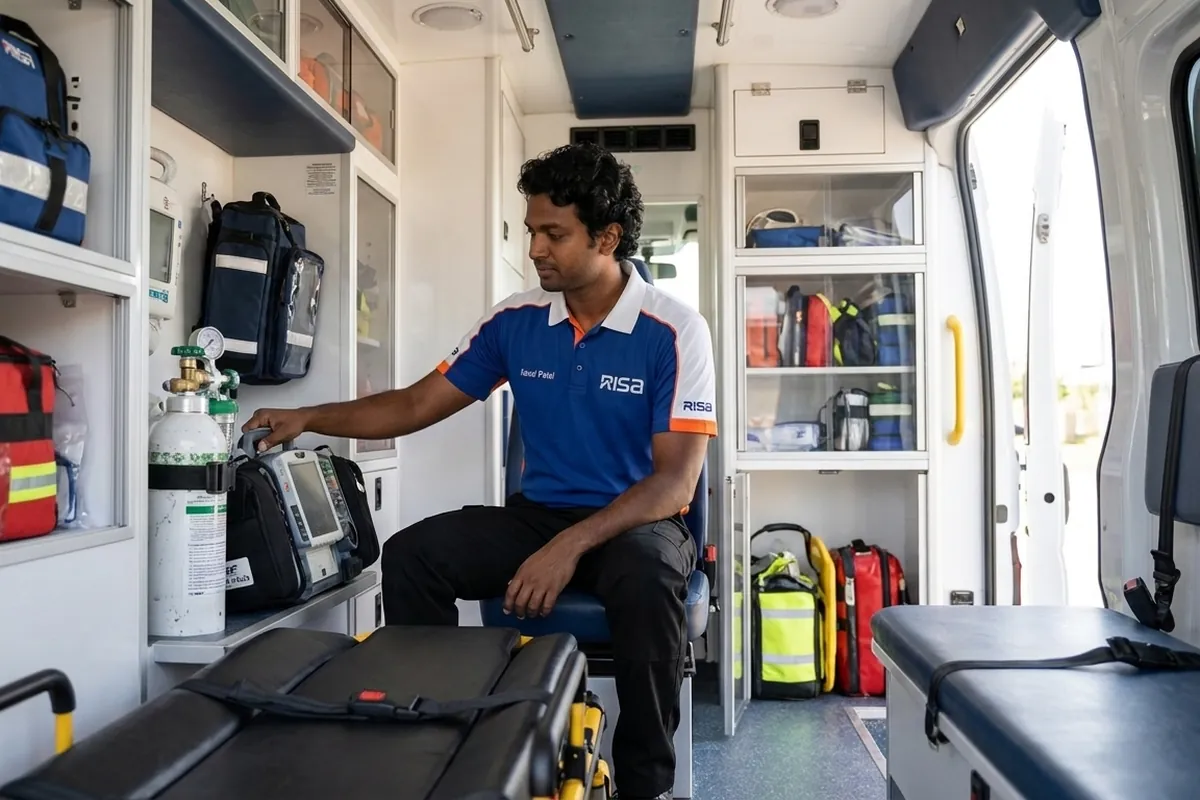
For critically ill patients moving between hospitals. A transport ventilator, infusion pumps and critical care trained staff, planned bed to bed with both clinical teams.
Critical Care vehicles are set up for each patient before the transfer begins.
Every step is agreed between the sending team, the receiving team and RISA before the patient moves.
The treating team calls RISA with the patient details and the receiving hospital.
Doctors at both ends agree the plan, the timing and the support needed on the way.
A Critical Care ambulance is equipped and checked for this patient.
Ventilation, infusions and monitoring continue without a break.
The crew hands over at the bedside with the full case record.

Keeps breathing support running from bed to bed.
Vital signs on screen for the whole transfer.
Medicines and fluids delivered at the set rate.
Ready for any change in heart rhythm.
Airway care on the way.
Planned for the full length of the journey.

The transfer ends where it began: at a bedside, with the full record.
The crew briefs the receiving ICU team in person, with notes, settings and medicines given on the way.
A short checklist helps the transfer start on time and keeps the receiving team fully informed.
The RISA transfer desk works through this list with your team on the call. Nothing moves until both clinical teams have agreed the plan.
Critical Care is the highest of three care levels.
Stable patients who need care and a safe ride
Patients who need monitoring and intervention on the way
Critically ill patients and intensive care transfers
Not sure which level you need? You do not have to decide. The call taker asks a few questions and sends the right one.
Call the toll free number or reach the transfer desk. The team plans the move with both hospitals.
In an emergency, call 1800 108 1800 at any hour. For anything else, write to contact@smartambulance.com.
Visit the help centreAn ambulance equipped like a moving intensive care unit, with a transport ventilator, infusion pumps, a monitor and critical care trained staff.
Usually the treating hospital. Families can also call, and the RISA team will speak to the treating doctor.
Yes, a doctor can be arranged for transfers that need one. Ask the transfer desk when you plan the move.
Yes. Planned critical care transfers between cities and across states are arranged with both hospitals.
The full case record and a bedside handover from the crew.
Tell us who you are and we will open the right form.